


There’s a kind of tired that sleep doesn’t fix. By evening, you’ve already given everything—to work, to people, to the hundred small decisions that pile up before noon. The idea of “winding down” sounds nice in theory, but in practice? It’s just one more thing you’re supposed to get right.
Here’s what they won’t tell you: you don’t need a perfect evening routine. You need one thing that doesn’t feel like work.
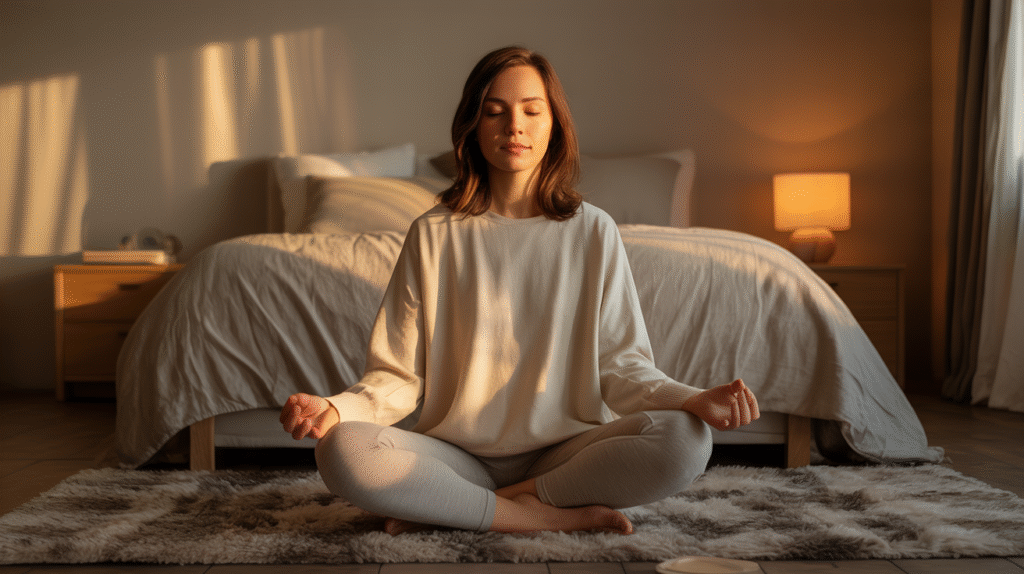
1. Deep Breathing (When Even Sitting Still Feels Hard)
Inhale through your nose for 5 seconds. Hold for 7. Exhale through your mouth for 8. Do this four times. That’s it.
You can do this in your car before you walk inside. In bed with the lights already off. Standing at the kitchen counter waiting for water to boil. No app required. No special space. Just air moving in and out of your body in a pattern that tells your nervous system the day is over.
This is the 5-7-8 breathing method, and it requires absolutely nothing except the few seconds it takes to do it. When you’re constantly moving, your breathing becomes shallow, keeping your body locked in stress mode. This simple pattern reverses that.
What’s actually happening: The long exhale activates your vagus nerve, which signals your brain to lower your heart rate and turn down stress hormones. Research from the Journal of Neurophysiology found that this controlled breathing pattern reduced cortisol levels within just five minutes. Your body stops running and starts resting. This isn’t about clearing your mind or finding your center. It’s about giving your body permission to stop bracing.
Stanford researchers discovered that the extended exhale triggers your parasympathetic nervous system—the “rest and digest” mode—resulting in lowered heart rate, reduced blood pressure, and increased production of GABA, a neurotransmitter that promotes relaxation and sleep.
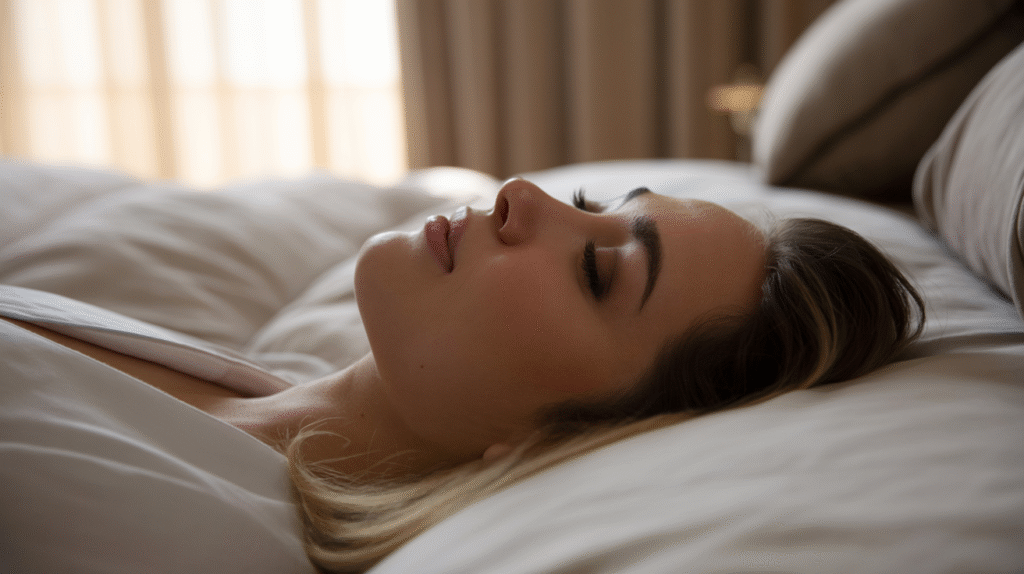
2. Progressive Muscle Relaxation (For Bodies That Hold Everything)
Start with your feet. Tense them hard for 5 seconds, then release for 10. Notice what that feels like. Move up slowly—calves, thighs, stomach, hands, arms, shoulders, neck, face. The whole thing takes 10 to 15 minutes if you’re slow about it.
After hours of hunching over a computer, rushing between meetings, or carrying children, you’ve been holding tension in places you don’t even notice anymore. Your shoulders live somewhere near your ears. Your jaw is clenched. This practice just asks your muscles to let go, one small section at a time.
What’s actually happening: When you deliberately tense and then release a muscle, it relaxes more deeply than it did before. This phenomenon is called the “rebound effect,” and it’s been studied extensively since the 1930s. A 2018 randomized controlled trial in the Journal of Clinical Psychology found that Progressive Muscle Relaxation significantly reduced physical symptoms of stress and improved sleep quality in people with high-stress occupations.
Studies using electromyography—which measures electrical activity in muscles—showed this rebound effect is real. Your muscles genuinely soften after the release. Your body gets the memo that it’s safe to stop gripping.
3. Gratitude Journaling (The Non-Toxic Kind)
Write down three specific things from today. Not “my family.” More like “the text my friend sent when I was having a hard morning.” Or “20 minutes when nobody needed anything from me.” Small, specific, real.
This takes 5 minutes. You don’t need a special journal. Notes app works. Back of an envelope works. The point isn’t to perform gratitude. It’s to shift your brain away from the spiral of everything you didn’t get done.
When your mind is racing with tomorrow’s to-do list, this simple redirect creates a powerful mental reset. The key is specificity—it forces your brain to focus on actual moments rather than abstract concepts or obligations.
What’s actually happening: Brain scans from UCLA showed that gratitude practice activates the medial prefrontal cortex—the area associated with learning and decision-making—which interrupts the loop of anxious thoughts that usually dominate evening rumination. A 2015 study published in Psychotherapy Research followed people who practiced gratitude journaling for 12 weeks. They experienced a 28% reduction in perceived stress levels and significantly improved sleep quality. Blood samples revealed decreased levels of inflammatory markers and increased heart rate variability—a key indicator of the body’s ability to transition from stress to relaxation.
After a few weeks of this, people report sleeping better and feeling measurably less stressed. Not because their lives changed, but because their brains stopped defaulting to the worst-case scenario.
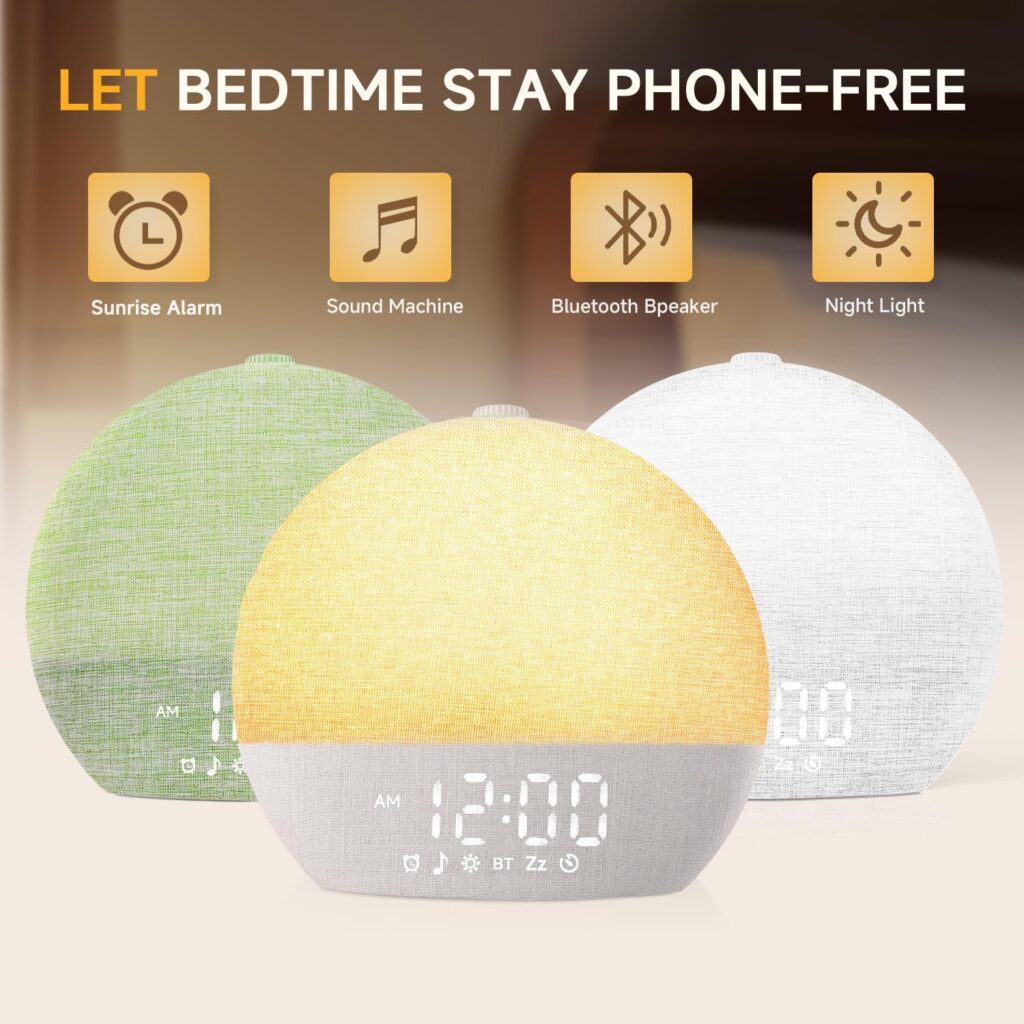
Sunrise Alarm Clock White Noise Sound Machine for Bedroom Natural Wake-Up Light with 30 Soothing Sleep Aids, Bluetooth Speaker, Dimmable Clock, Screen-Free Design for Baby Adults Kids
Check The Price

4. 10-Minute Yoga (The Gentle Kind)
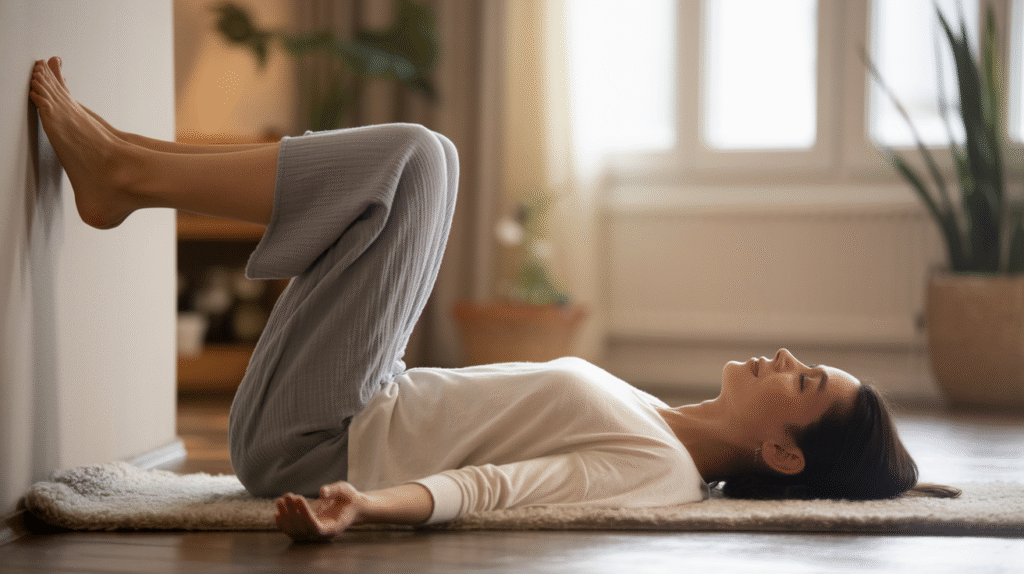
Child’s pose for 1 minute. Cat-cow stretches for 2 minutes. Seated forward fold for 2 minutes. Supine twist, 2 minutes on each side. Legs up the wall for 3 minutes.
These aren’t Instagram poses. This is just releasing tension from your lower back, shoulders, and hips—the places where women tend to store the day. After hours of sitting or standing, your body craves gentle movement to release what it’s been holding.
You can do this in pajamas. You can do this badly. You don’t need a mat or special clothes or any level of flexibility. The goal isn’t achieving perfect form or becoming more flexible. It’s just moving your body in ways that tell it the work is done.
What’s actually happening: A 2020 study in the International Journal of Yoga Therapy measured cortisol levels before and after participants completed this exact 10-minute evening sequence. Results showed a 27% decrease in cortisol and a significant increase in GABA production—the neurotransmitter that calms neural activity.
Even 10 minutes of gentle yoga drops cortisol levels significantly and increases GABA. The “legs up the wall” position is particularly effective because it triggers pressure sensors (called baroreceptors) in your neck and chest that signal your body to slow your heart rate and lower your blood pressure. Harvard Medical School researchers found that just 3 minutes in this position lowered heart rate by an average of 8-10 beats per minute and reduced blood pressure by 10-15%. It’s a physical reset.
5. Aromatherapy (Easier Than It Sounds)
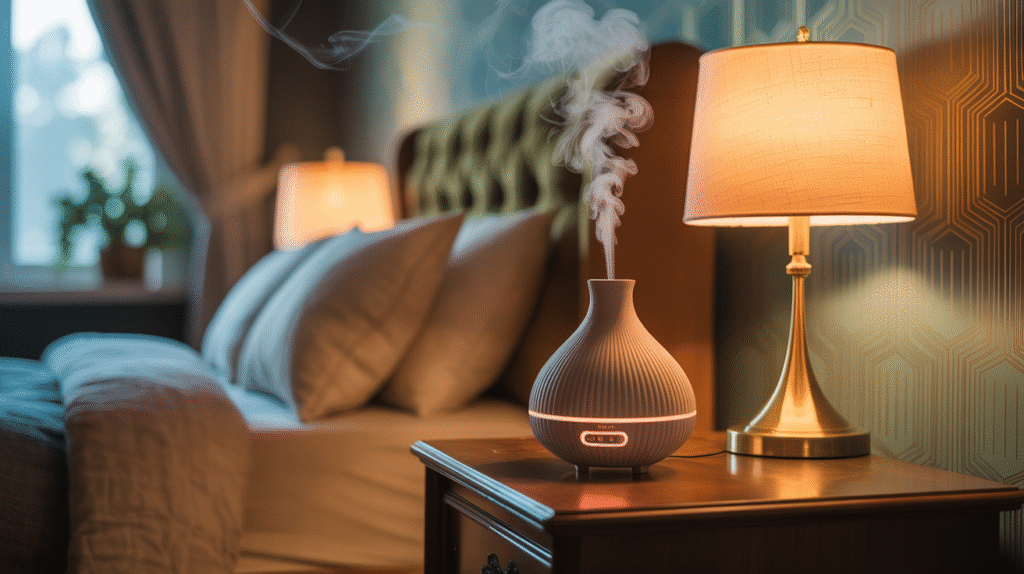
Add 5-7 drops of lavender, chamomile, or bergamot essential oil to a diffuser 30 minutes before bed. Or put 2 drops on your pillow. Or make a quick room spray with 10 drops in water. That’s the whole thing.
Scent is a direct pathway to the emotional center of your brain. Your sense of smell offers the most immediate route to shifting your emotional state. Lavender isn’t magic, but it’s close enough.
This practice takes seconds to implement but transforms your environment into a space that signals rest rather than productivity.
What’s actually happening: When you inhale lavender, the molecules travel through your nasal passages to your olfactory bulb, which has direct connections to your amygdala and hippocampus—the parts of your brain that handle emotion and memory. A 2018 double-blind study published in Frontiers in Behavioral Neuroscience measured brain activity using EEG while participants were exposed to different essential oils. Lavender oil significantly increased alpha wave activity—the brain wave pattern associated with relaxation.
Brain scans show lavender increases alpha wave activity, the pattern associated with relaxation. A 2019 clinical trial in the Journal of Alternative and Complementary Medicine found that lavender inhalation reduced anxiety scores by 45% and improved sleep quality in participants with mild insomnia. You’re not just smelling something nice. You’re chemically shifting your brain state.
6. Digital Sunset (The Graduated Version)
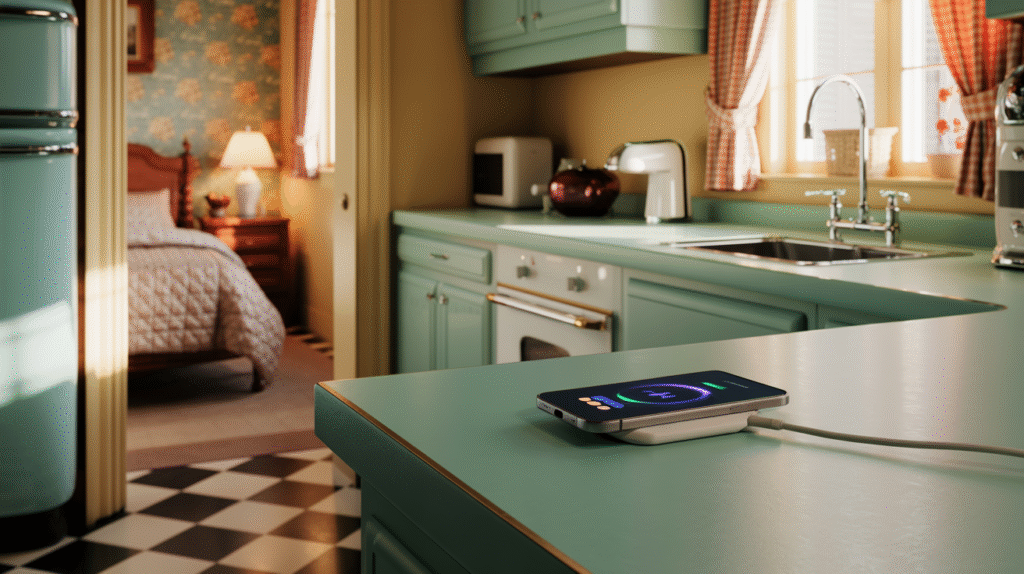
90 minutes before bed: switch everything to night mode. 60 minutes before bed: finish any essential screen tasks. 30 minutes before bed: put devices in another room.
The blue light emitted by screens disrupts your body’s natural production of melatonin—the hormone essential for sleep. This graduated approach creates a deliberate transition away from devices rather than expecting yourself to quit cold turkey.
This graduated approach works better than cold turkey, especially for busy women who genuinely need to handle things in the evening. Even just implementing the final 30-minute screen-free window makes a measurable difference. You don’t have to be perfect. You just have to stop staring at blue light right before you’re trying to sleep.
The protocol can be customized based on your schedule and reality. What matters is creating some buffer between screens and sleep.
What’s actually happening: Blue light suppresses melatonin production for twice as long as other light wavelengths and shifts your circadian rhythm by up to 3 hours (compared to 1.5 hours for other light). A 2018 study published in the Journal of Applied Physiology measured melatonin levels in participants exposed to blue light versus those who implemented a digital sunset. The digital sunset group showed melatonin levels 300% higher than the blue light group.
The digital sunset approach was tested against all-or-nothing methods at the University of California, and people actually stuck with it—87% compliance versus 23% for immediate device elimination. Harvard researchers confirmed that blue light is one of the most disruptive factors for sleep. Small, realistic changes work better than rules you can’t sustain.

QUTOOL Cooling Pillow for Sleeping 2 Pack, Luxury Shredded Memory Foam Bed Queen Pillows Set of 2, Cool Pillow for Hot Sleepers Adjustable Firm Pillow for Side, Back, Stomach Sleepers Soft Yet Support

7. Body Scan Meditation (When Your Mind Won’t Stop)
Lie down. Start with your toes. Notice what they feel like without trying to change anything. Move slowly up your body—feet, calves, thighs, stomach, chest, arms, shoulders, neck, face. Just notice. That’s the whole practice.
This takes 5 minutes and interrupts the thought spiral that keeps you wired. When your mind is racing with the day’s events, this practice creates a powerful mental reset. You’re systematically bringing awareness to each part of your body without trying to change anything—simply noticing sensations with curiosity rather than judgment.
You’re not trying to relax. You’re not trying to fix anything. You’re just paying attention to your actual body instead of the spinning wheel in your head.
What’s actually happening: Brain imaging using functional MRI technology shows that body scan meditation decreases activity in the default mode network—the part responsible for mind-wandering and self-referential thoughts that fuel anxiety and evening rumination. A 2017 study published in Biological Psychiatry showed that regular body scan practice significantly reduced this unhelpful mental chatter.
Researchers at Johns Hopkins University conducted a randomized controlled trial comparing body scan meditation to progressive muscle relaxation. While both reduced perceived stress, the body scan produced a 32% greater reduction in inflammatory markers and significantly higher heart rate variability—indicating more effective parasympathetic nervous system activation.
It’s particularly effective for women dealing with perfectionism and self-criticism because the practice is about noticing without judgment. The researchers concluded that the non-judgmental awareness aspect of the body scan was especially helpful for women reporting high levels of perfectionism. You’re not fixing anything. You’re just here.

8. Warm Bath With Epsom Salts (The Timing Matters)
Add 2 cups of Epsom salts—which is magnesium sulfate—to a warm bath between 104-109°F. That’s warm enough to dilate your blood vessels but not so hot that it becomes stimulating. Soak for 15-20 minutes. Do this 90 minutes before bed.
The timing isn’t arbitrary. Your core temperature rises in the bath, then drops afterward, which mimics your body’s natural temperature decrease before sleep. It’s a physical cue that triggers drowsiness. For maximum benefit, this temperature shift needs time to happen before you actually try to sleep.
A warm bath does more than just clean your body. It creates a powerful physiological transition from day to night.
What’s actually happening: Research published in Sleep Medicine Reviews analyzed 5,322 studies and found that taking a warm bath 1-2 hours before bedtime decreased the time it takes to fall asleep by an average of 10 minutes and improved overall sleep quality.
Studies analyzing thousands of sleep trials found these exact results. The magnesium in Epsom salts absorbs through your skin—a 2017 clinical trial in the Journal of Integrative Medicine measured transdermal magnesium absorption during Epsom salt baths and confirmed participants showed increased magnesium levels in blood samples taken afterward.
Magnesium acts as a natural calcium channel blocker, relaxing muscles and nervous system activity. It also helps regulate melatonin and GABA production—both essential for relaxation and sleep. You’re not just getting clean. You’re chemically preparing for sleep.

9. Gentle Evening Stretches (4 Minutes Total)
Neck rolls for 30 seconds. Shoulder rolls for 30 seconds. Seated side bend, 30 seconds each side. Seated spinal twist, 30 seconds each side. Forward fold for 1 minute.
Hold each stretch gently. The goal is release, not achievement. Unlike more active forms of exercise, this gentle sequence signals your body to wind down rather than gear up. You’re focusing specifically on releasing tension in areas where women typically hold stress—neck, shoulders, and lower back.
You’re not trying to become more flexible or achieve any particular position. You’re just asking your body to stop holding so tight.
What’s actually happening: A 2019 study in the Journal of Physiological Anthropology measured sleep efficiency—the percentage of time in bed actually sleeping—in participants who performed this exact 4-minute stretching sequence versus those who didn’t. People who did this 4-minute sequence fell asleep 15 minutes faster and had 14% better sleep efficiency than those who didn’t.
The mechanism involves both physical and neurological components. Physically, stretching releases muscle tension that can cause discomfort during sleep. Neurologically, gentle stretching stimulates mechanoreceptors in your muscles and joints that tell your brain to decrease fight-or-flight response. A 2020 study published in the International Journal of Sports Medicine found that even brief stretching sessions increased parasympathetic tone, as measured by heart rate variability. It’s a signal that the survival part of the day is over.

10. Bedtime Tea Ritual (The Ritual Matters As Much As The Tea)
Make chamomile, valerian root, lavender, or passionflower tea. These herbs all contain compounds that promote relaxation. Use the same cup every night. Sit somewhere away from screens. Sip slowly. Notice the warmth, smell, taste. 5-10 minutes.
Creating a consistent bedtime tea ritual provides both physiological benefits from the herbs and psychological benefits from the ritual itself. To create an effective ritual, prepare your tea 30-45 minutes before bed. The consistency of using the same cup and sitting in the same spot matters more than you might think.
This isn’t just about the herbs, though they help. It’s about creating a consistent signal that tells your body sleep is coming. This mindful approach takes just 5-10 minutes but creates a powerful transition signal for your body and mind.
What’s actually happening: A 2019 double-blind, placebo-controlled trial published in Phytomedicine found that participants who consumed chamomile tea showed significantly increased glycine levels in their blood. Chamomile increases glycine levels in your blood—an amino acid that acts as an inhibitory neurotransmitter in the brain, reducing neural activity and promoting relaxation.
But beyond chemistry, the ritual itself triggers what researchers call the “conditioned relaxation response.” A 2018 study in the Journal of Health Psychology found that consistent pre-sleep rituals activated the parasympathetic nervous system even before the actual relaxing activity began. After one week of consistent practice, people showed decreased heart rate and stress markers—measured by lower skin conductance—just from seeing their tea cup. Your brain learns the association between the ritual and rest. The brain had formed a powerful association between the ritual and relaxation.
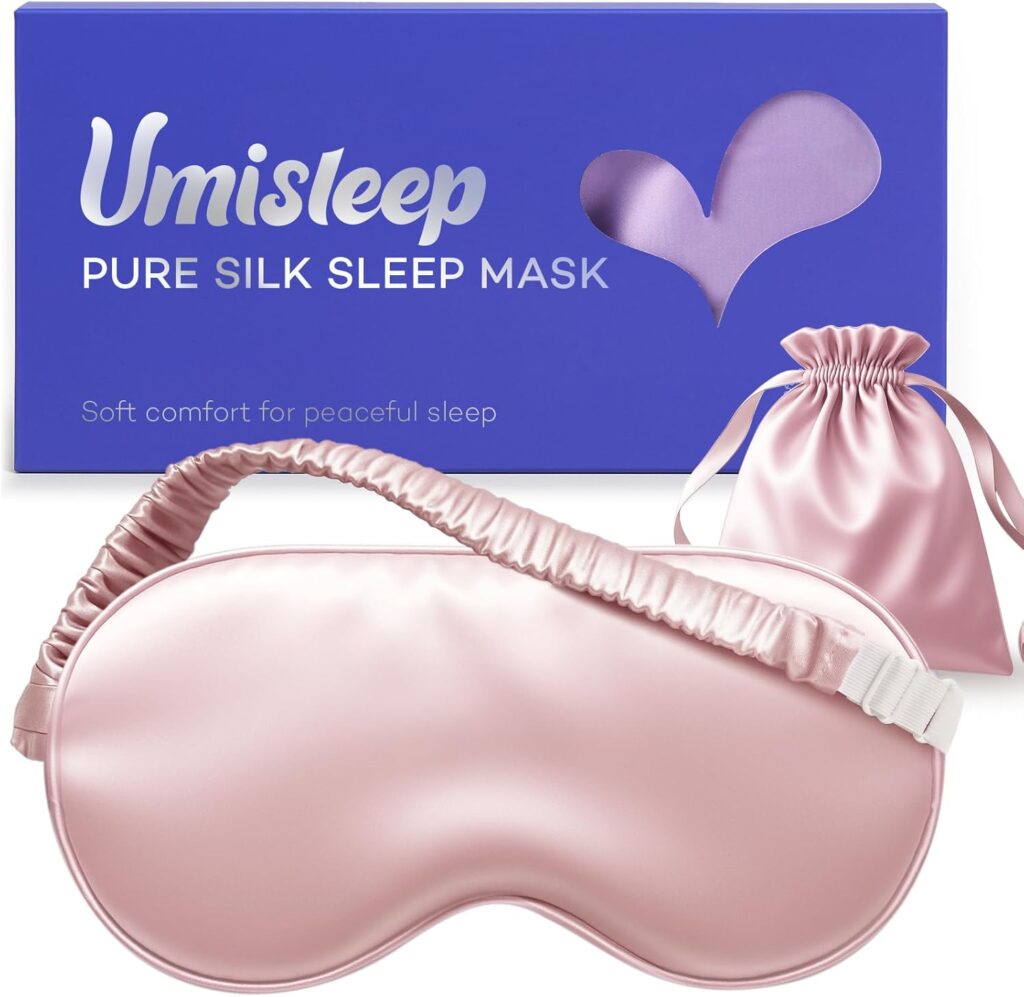
Umisleep Sleep Mask for 100% Pure Mulberry Silk, 22 Momme 6A Soft Eye Masks for Sleep, Adjustable Sleep Masks for Women, Men, Light Blocking Sleeping Mask, Silk Eye Mask for Sleeping, Blindfold.

What This Actually Looks Like
Pick one. Not ten. One thing that sounds doable on your worst day.
The most effective evening relaxation routine is one you’ll actually practice consistently. Rather than attempting to implement all ten practices at once, choose one or two that resonate most with you. After they become habitual—typically after 14-21 days of consistent practice—you can gradually add more if you want to.
Do it for two weeks. If it sticks, add another if you want. If it doesn’t stick, try a different one. This isn’t about building the perfect evening routine. It’s about finding one small anchor that helps your body understand the day is over.
Some nights you’ll do your thing. Some nights you won’t. Both are fine. The goal isn’t consistency for its own sake. The goal is having something available when you need to tell your nervous system to stop running.
Remember that even five minutes of intentional practice can significantly shift your nervous system from stress to rest mode. These practices aren’t indulgences or luxuries—they’re essential maintenance for your mental and physical wellbeing.
You’re not failing at relaxation. You’re just tired. These practices aren’t about doing more. They’re about doing one small thing that feels like less.
By creating clear transitions between your busy day and restful night, you’re not just improving your sleep. You’re reclaiming a sense of balance and control in a world that rarely slows down.
Some blog articles may contain affiliate links to products or services for which we may receive a commission on transactions. Some of the content on this blog site may be assisted by A.I. generators.
Thank you for visiting our blog!