



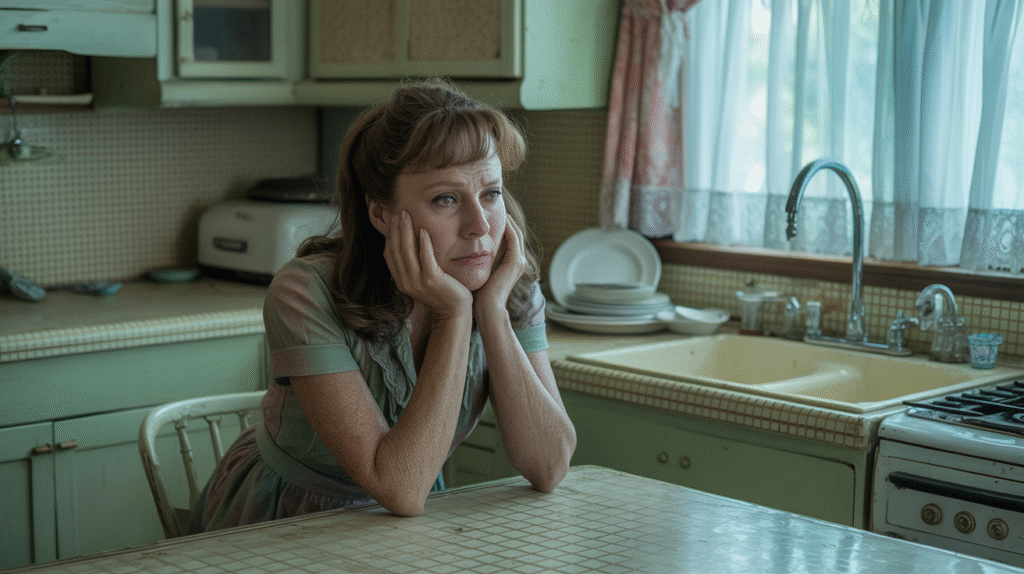
You’re standing at the kitchen counter at 6:47 a.m., staring at the coffee maker like it might hold answers.
Your daughter’s asking about her permission slip. Your phone’s buzzing with work emails. There’s something sticky on the floor you’ll deal with later (or never). And you’re so tired you can’t remember if you actually put coffee grounds in the machine or just stood here thinking about it.
This is your third cup before 9 a.m., and you already know it won’t help.
Not really.
Because this isn’t the kind of tired that caffeine fixes. It’s not even the kind that a full night’s sleep would cure. It’s deeper than that. It shows up in how long it takes you to answer simple questions, in the way you snap at your kid over something small, in how you’ve started forgetting words mid-sentence.
You’re still getting up. Still doing what needs to be done. But somewhere along the way, pushing through stopped working.
You don’t feel capable anymore. You feel stretched too thin, moving through your days on autopilot, waiting for a break that never comes.
If that moment feels familiar, you’re not broken.
You’re burned out.
Burnout Isn’t a Discipline Problem

Here’s what makes burnout so frustrating: everyone treats it like you’re not trying hard enough.
Get more organized. Practice better self-care. Try a morning routine. Meal prep on Sundays.
But burnout doesn’t come from doing too little. It comes from doing too much for too long without real recovery.
When your energy’s already depleted, advice that assumes you have capacity to spare just adds more weight. And that weight doesn’t heal burnout. It makes it worse.
Get Your Copy
Why Standard Recovery Advice Fails Working Moms

The typical burnout recovery playbook assumes you can take time off without consequences. That you can slow down, remove responsibilities, restructure your life.
For working mothers? That’s fantasy.
Work still happens. Bills still get paid. Kids still need someone to remember picture day and show up at bedtime and explain why the sky is blue for the fourteenth time this week.
So when someone tells you to “just rest more” or “make yourself a priority,” it doesn’t land as helpful. It lands as one more thing you’re apparently failing at.
That’s why so many women stay stuck. They know something’s wrong, but the solutions they’re handed don’t fit the life they’re actually living.
The Question That Changes Everything
Instead of asking, What should I be doing?
Try asking, What can I realistically support today?
That shift changes everything.
Burnout recovery doesn’t require perfection. It doesn’t need a complete life overhaul or a flawless routine you’ll maintain forever.
It starts with understanding that your energy fluctuates. Some days you have more. Some days you’re running on fumes. And recovery happens when your expectations shift with those changes instead of staying locked at “high-functioning” all the time.
You’re allowed to have low-energy days. You’re allowed to adjust what gets done based on how you actually feel, not how you think you should feel.
Recovery Usually Means Doing Less, Not More
Here’s what nobody tells you: healing from burnout doesn’t come from adding things.
Not more routines. Not more self-care tasks. Not more tracking or optimizing or trying harder.
It comes from subtraction.
Less pressure on yourself to perform at 100% every single day. Fewer unrealistic expectations about what a “good mom” or “good employee” looks like. Permission to stop doing the things that drain you without giving anything back.
That doesn’t mean giving up. It means being honest about your capacity and choosing stability over constantly running yourself into the ground.
You Don’t Have to Fix It All at Once

Burnout feels overwhelming because everything seems urgent and unfinished at the same time.
Your brain reads that as danger. Which makes rest feel impossible, even when you’re exhausted.
Recovery doesn’t come from fixing everything. It comes from creating safety and predictability again, one small piece at a time.
Maybe that’s stabilizing your sleep before worrying about productivity. Or addressing the guilt before adding new goals. Or setting one boundary instead of trying to overhaul your entire schedule in a week.
Small, intentional steps work better than dramatic changes you can’t maintain.
What Energy-Based Living Actually Looks Like
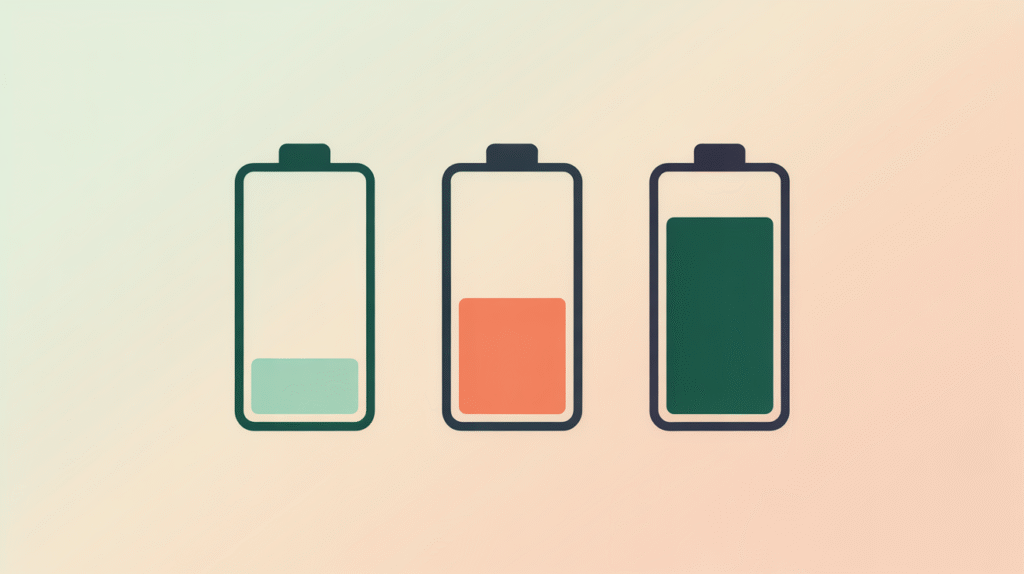
Energy-based living means you stop pretending every day is the same.
On a low-energy day, dinner might be cereal. Or sandwiches. Or whatever’s fastest and doesn’t require you to stand at the stove.
On a medium-energy day, maybe you throw together something simple. Pasta with jarred sauce. Rotissable chicken and bagged salad.
On the rare high-energy day, you might actually cook something that requires chopping vegetables.
None of those options are better or worse. They’re all legitimate responses to how much you have to give that day.
The same applies to work, to parenting, to everything. You’re not aiming for perfect. You’re aiming for sustainable.
When Rest Doesn’t Feel Restful

Sometimes even when you get time to yourself, it doesn’t help.
You scroll your phone for an hour and feel worse. Or you try to relax but your brain won’t stop running through tomorrow’s to-do list.
That’s not because you’re bad at resting. It’s because your nervous system is still stuck in overdrive.
Real recovery happens when you feel safe enough to slow down. That takes time. It takes repetition. And it takes giving yourself permission to not be productive, even for a few minutes.
Sometimes rest looks like sitting in your car in the driveway before you go inside. Sometimes it’s letting the laundry sit for another day. Sometimes it’s saying no to one more thing, even if people are disappointed.
Those aren’t luxuries. They’re necessities.
You’re Not Failing

If you’re reading this and thinking, But I don’t have time to recover, I get it.
The truth is, you don’t have time NOT to.
Burnout doesn’t stay neatly contained. It spills into your health, your relationships, your ability to think clearly or feel anything other than numb or overwhelmed.
Recovery doesn’t mean quitting your job or abandoning your responsibilities. It means stopping the cycle of running yourself into the ground and then blaming yourself for not bouncing back fast enough.
You’re allowed to need support. You’re allowed to admit this is hard. You’re allowed to try a different way forward, even if it’s not what everyone else is doing.
A Different Way Forward

If you’re exhausted, overwhelmed, and unsure where to start, you don’t need another system that demands more from you.
You need something that meets you where you are. Something that doesn’t require energy you don’t have or time you can’t find.
That’s why I created From Burnout to Balance: The Working Mom’s Recovery Workbook. It’s a realistic, energy-based guide for working mothers who are done pushing through and ready to try something gentler.
You don’t have to rush through it. You don’t have to complete it in order. And it’s not about becoming more productive.
It’s about learning how to support yourself again in a way that fits real life.
You don’t need to push harder. You don’t need to fix everything at once.
You just need a starting point that doesn’t ask for more than you can give.
Frequently Asked Questions
What if I’ve tried to recover from burnout before and nothing worked?
Most burnout advice assumes you can take extended time off or make big life changes. If those approaches didn’t work, it’s not because you failed. It’s because they weren’t realistic for your situation. Energy-based recovery works differently because it adapts to what you can actually do on any given day, not what you theoretically should be able to do.
How long does it take to recover from burnout?
There’s no universal timeline. It depends on how long you’ve been burned out, what resources you have available, and how much flexibility exists in your life. Some people notice small shifts within weeks. For others, it’s a months-long process. The goal isn’t speed. It’s sustainable change that doesn’t crash and burn after two weeks.
Can I recover from burnout while still working full-time?
Yes. Recovery doesn’t require quitting your job, though it does require honesty about what you can sustain. That might mean adjusting how you approach work, setting clearer boundaries, or letting go of perfectionism. The workbook includes strategies specifically designed for women who can’t step away from their responsibilities.
What’s the difference between burnout and just being really tired?
Regular tiredness improves with rest. Burnout doesn’t. It’s characterized by emotional exhaustion, cynicism or detachment, reduced performance, and a feeling that nothing you do matters or makes a difference. If a weekend or vacation doesn’t help, and you feel chronically depleted, that’s a sign of burnout rather than simple fatigue.
Is it selfish to focus on my own recovery when my family needs me?
No. You can’t pour from an empty cup isn’t just a saying. When you’re burned out, everyone around you feels the impact. Your patience is shorter. Your presence is less engaged. Your health suffers. Taking steps to recover isn’t selfish. It’s the responsible thing to do for yourself AND the people who depend on you.
Get Your Copy
Some blog articles may contain affiliate links to products or services for which we may receive a commission on transactions. Some of the content on this blog site may be assisted by A.I. generators.
Thank you for visiting our blog!